
Practical guidance for life at home
What Actually Makes a Bathroom Easier to Use?
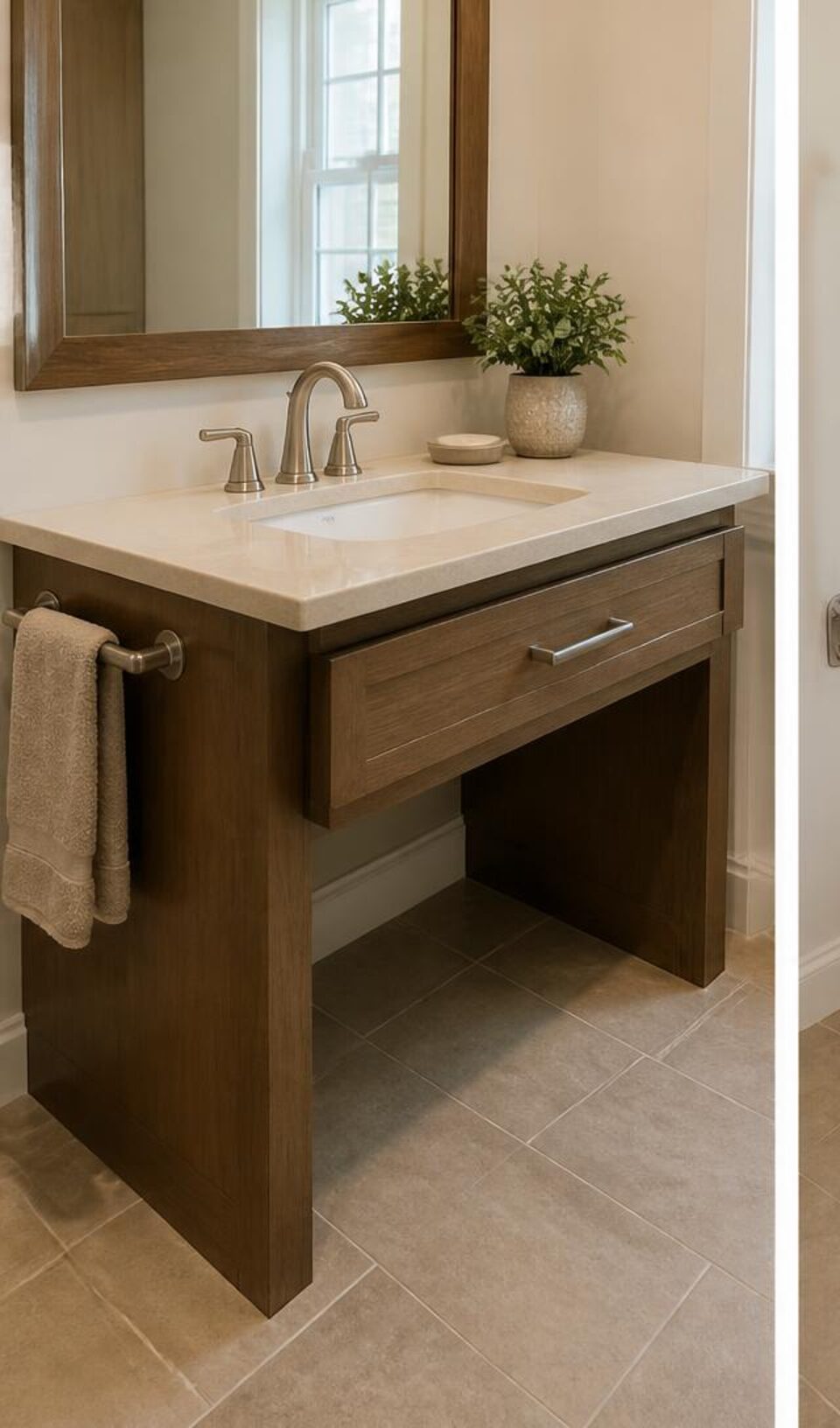
An accessible bathroom is not a normal bathroom with a few medical-looking parts attached. It is a room that asks less of the person using it. The floor is easier to cross, support appears where balance is needed, controls are within reach, and there is room to move without bumping into fixtures.
Begin with movement through the room
Stand at the bathroom door and look at the route to the toilet, sink, and shower. A wider doorway is helpful only if a vanity blocks the turn inside. Clear floor space can allow a walker or wheelchair to move, and it gives a caregiver room to help without awkward lifting.
Door swing matters in a small bathroom. An outward-swinging or pocket door may preserve usable space and make emergency access easier, although wall conditions and privacy hardware must be considered.
The shower should reduce balancing
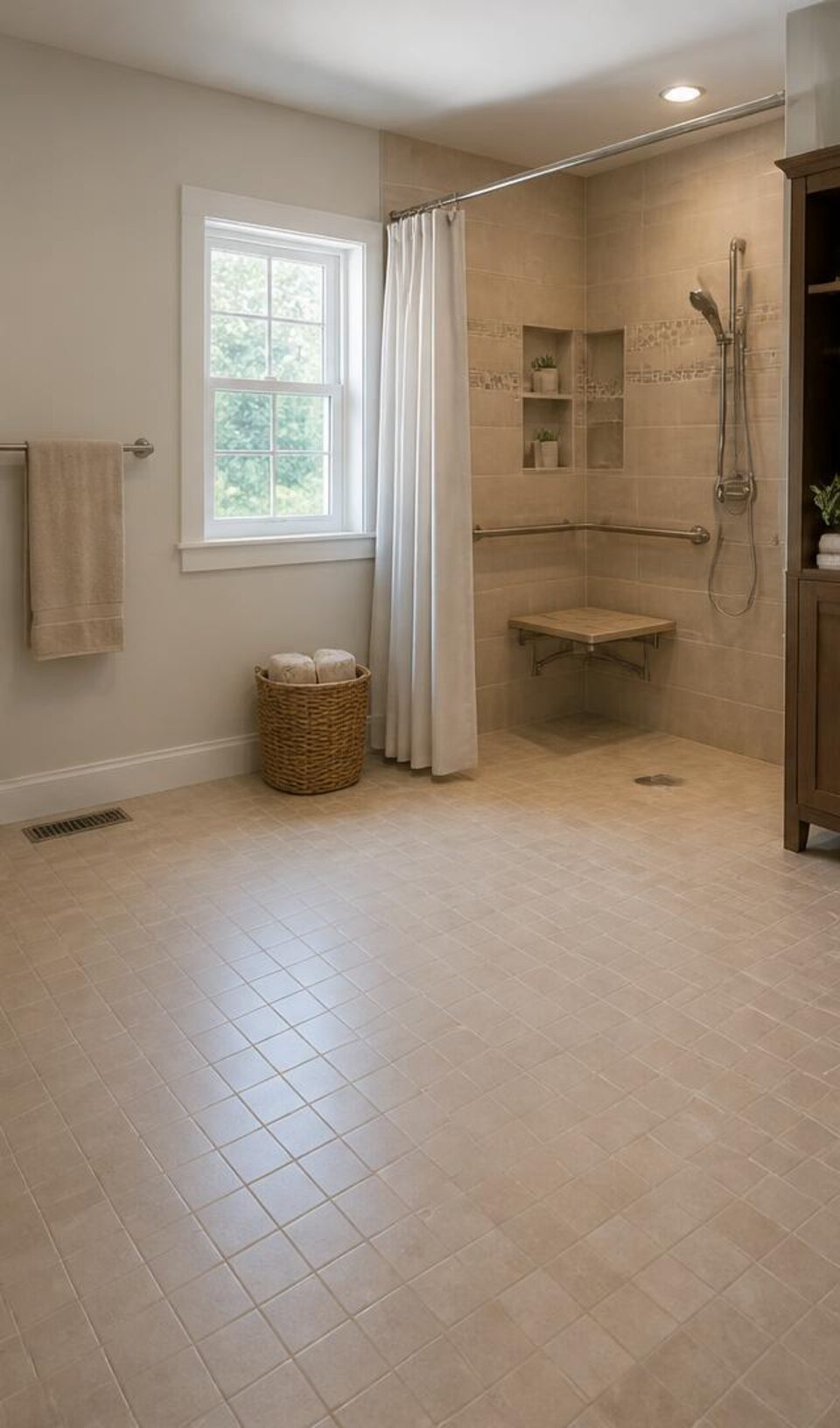
A curbless or low-threshold entrance removes the biggest obstacle in many bathrooms. Inside, a bench allows someone to conserve energy, and a handheld shower brings the water to the person. Well-placed grab bars support entry, turning, and standing. Good drainage and waterproofing keep those visible improvements from creating hidden trouble.
Textured flooring can improve traction, but it must also be practical to clean. Controls should be reachable without standing under cold water, and temperature protection can help prevent accidental scalding.
Toilets and vanities need a personal fit
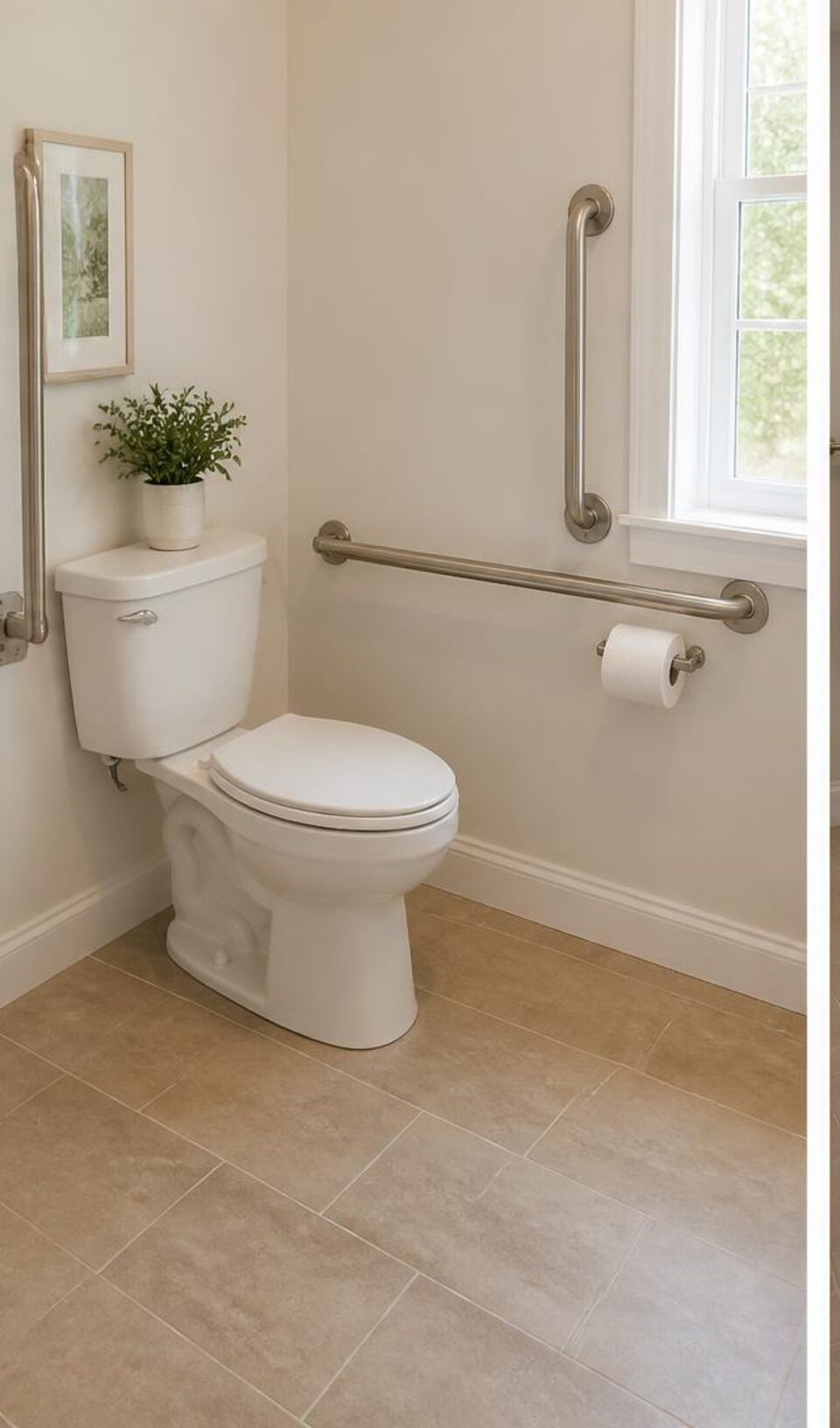
A taller toilet can make standing easier for some people, but it can leave a shorter person's feet unsupported. Transfer style, leg strength, and wheelchair seat height should guide the decision. Grab bars require structural backing and must be positioned where the user can reach them naturally.
At the sink, lever or touch controls reduce grip demands. Seated users may need knee space, protected plumbing, and a mirror that works from a lower eye level. Reachable drawers often serve people better than deep cabinets.
Comfort and beauty belong in the plan
Warm lighting, familiar materials, attractive hardware, and useful storage are not extras. A bathroom is a private space used every day, and people are more likely to use safety features that feel like a natural part of the room.
Private homes generally are not governed like public ADA restrooms. ADA dimensions can be useful references, but residential design should also consider the resident, local code, and existing structure. The best result feels calm, sturdy, and unmistakably like home.
Keep exploring with our walk-in shower guide or our ADA bathroom requirements.
Design around the person using the room
We can evaluate the complete bathroom and help you choose the features that support real routines, mobility, and caregiver needs.