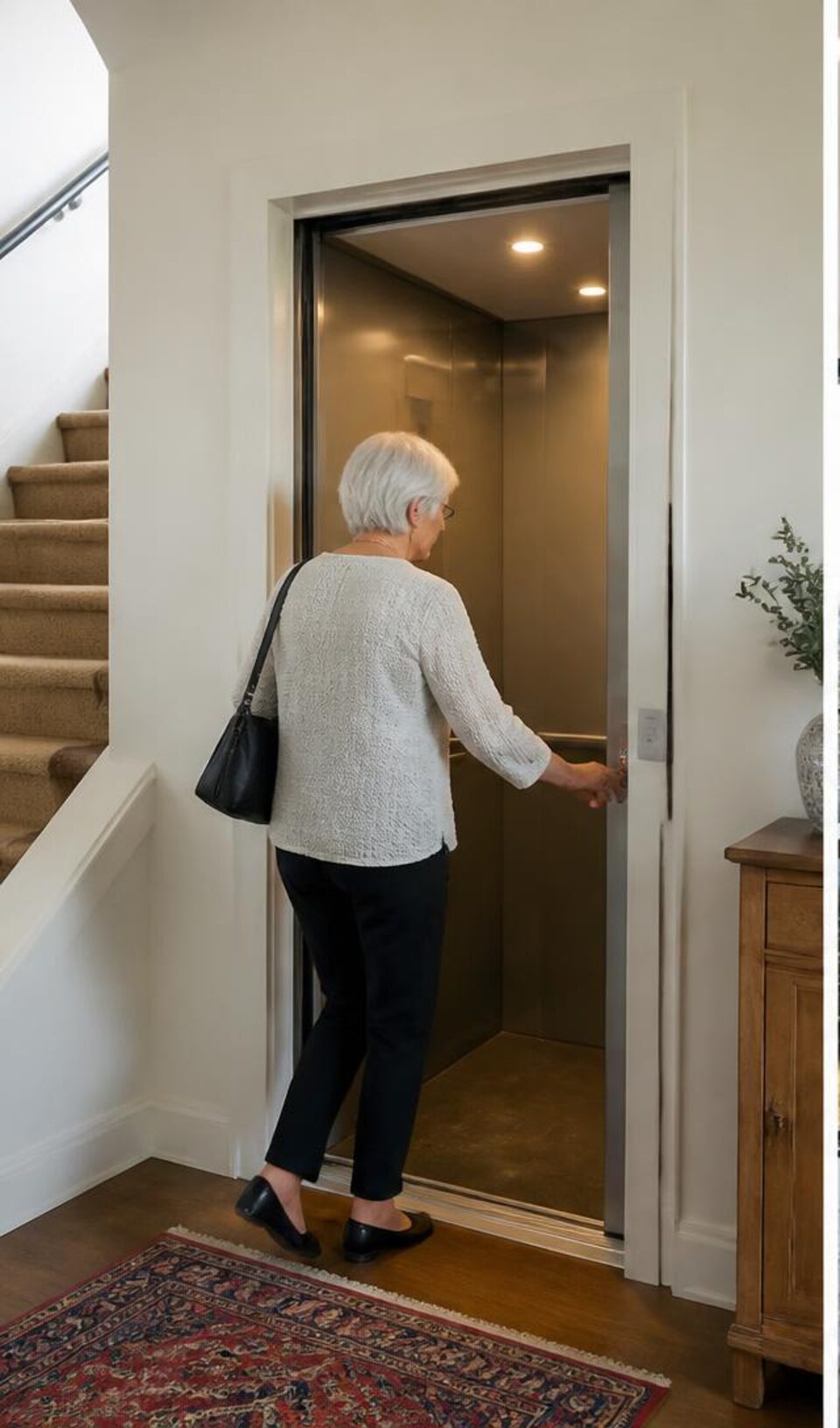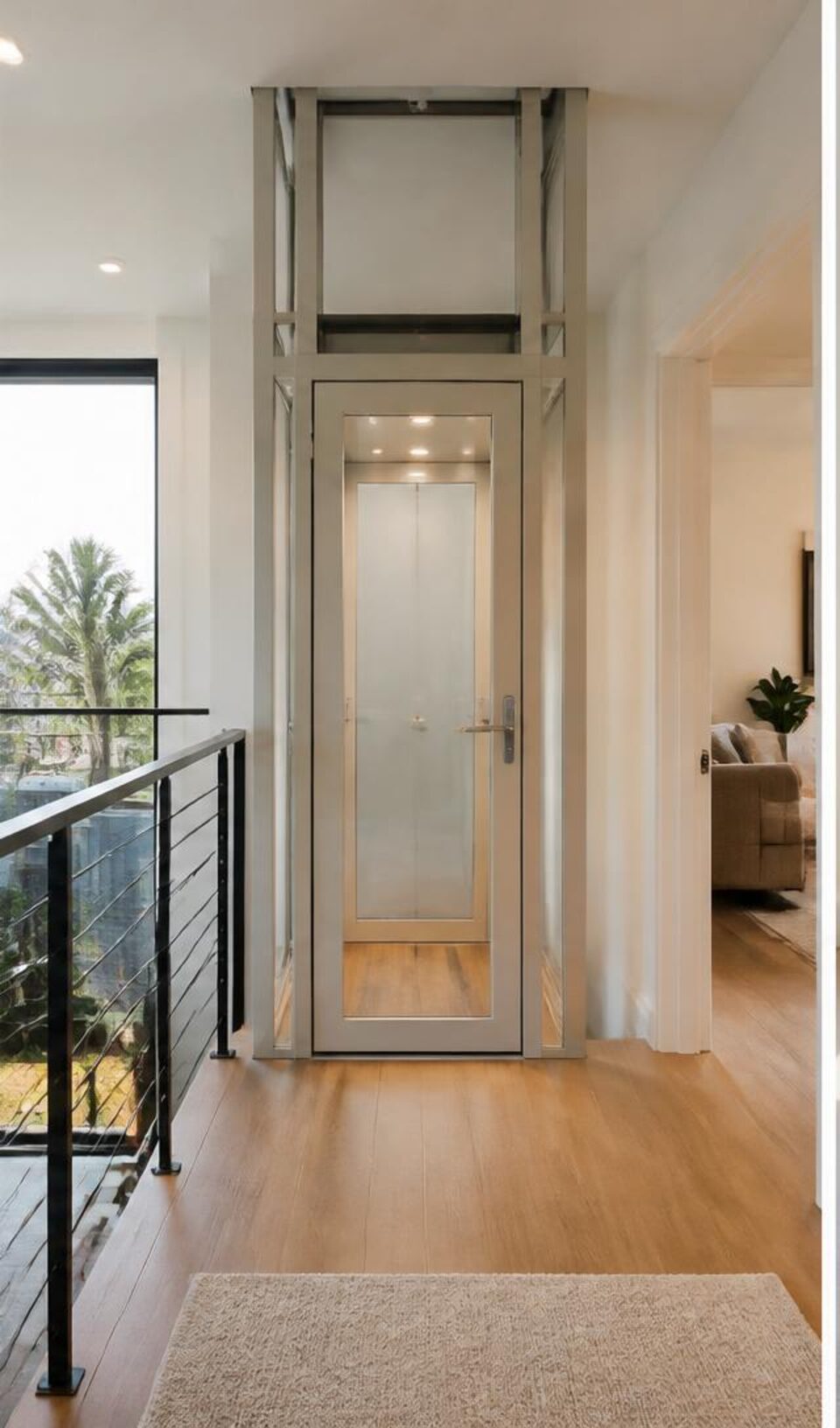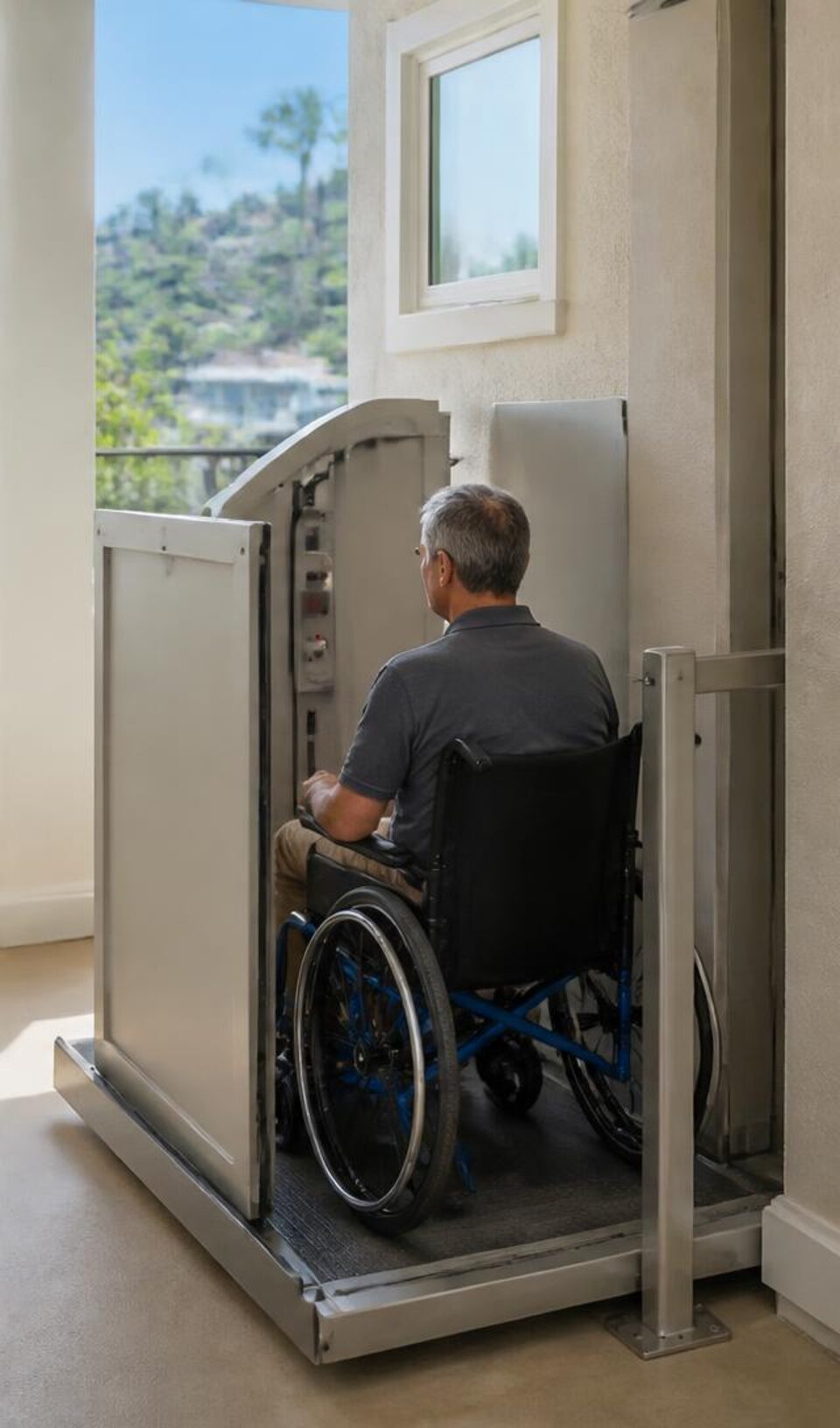
Modern home elevator installed in residential home

    Home Elevators & Domestic Lifts: The Complete Guide for Your Home

    December 1, 2024

    If you're noticing stairs becoming more of a challenge—or you're planning ahead for aging in place—you've probably started looking into home elevators and domestic lifts. These systems are no longer just for luxury homes. They're becoming a practical accessibility upgrade that can keep you in your home longer, increase comfort, and even boost resale value.

    This guide walks through what a home elevator is, how it differs from domestic lifts and stairlifts, common types, space requirements, safety features, and what to expect during installation.

    What Is a Home Elevator?

    A home elevator is a powered lift that moves people between floors inside a private residence. Unlike commercial elevators in office buildings, home elevators:

    • Serve fewer floors (often 2–4)
    • Carry fewer passengers and lighter loads
    • Are designed around residential architecture and aesthetics

    They can be integrated into new construction or retrofitted into an existing home, depending on the model and structural conditions.

    What Are Domestic Lifts?

    "Domestic lifts" is a broader term often used (especially outside the U.S.) to describe smaller lifts installed in private homes. A domestic lift might be:

    • A traditional shafted elevator with a car and doors
    • A compact through-floor lift that travels between two levels
    • A vertical platform lift designed for wheelchair access

    In other words: all home elevators are domestic lifts, but not all domestic lifts are full traditional elevators.

    Home Elevator vs Stairlift vs Domestic Lift

    It's easy to confuse the options:

    Stairlift

    A chair that travels along a rail mounted to your staircase. It's typically the lowest-cost solution, but only carries one seated person at a time and doesn't move large items or wheelchairs easily.

    Domestic lift / home elevator

    A small elevator or platform that moves vertically between floors. It can carry one or more people, mobility devices, and laundry, groceries, or boxes.

    When a stairlift makes sense:

    • You or a loved one can still transfer safely from standing (or wheelchair) to the stairlift seat.
    • You only need to solve the problem of one person using the stairs.
    • Budget is tight and you're looking for the simplest, fastest install.

    When a home elevator or domestic lift is better:

    • You use a wheelchair, walker, or other mobility device.
    • Multiple people in the home will benefit from the elevator.
    • You want to move bulky or heavy items between floors.
    • You care about future resale value and "aging in place" marketability.

    Main Types of Home Elevators & Domestic Lifts

    Most residential systems fall into a few categories:

    1. Hydraulic Home Elevators

    • Use a hydraulic piston to raise and lower the elevator car.
    • Smooth, quiet ride.
    • Usually requires a small machine room or cabinet for equipment.
    • Common in traditional multi-story homes.

    2. Traction / Machine-Room-Less (MRL) Elevators

    • Use counterweights and cables, similar to commercial elevators but scaled for homes.
    • Typically don't need a separate machine room (equipment is in the hoistway).
    • Efficient, good for tighter spaces where a hydraulic machine room is tricky.

    3. Pneumatic / Vacuum Elevators

    • Cylindrical "tube" design where air pressure moves the car up and down.
    • Minimal construction: often no deep pit or extensive shaft.
    • Eye-catching, modern look; can be a focal point in an open space.
    • Often ideal when retrofitting into existing homes.

    4. Through-Floor Domestic Lifts / Platform Lifts

    • Travel through a cut-out in the floor, typically between two levels.
    • Some models carry a wheelchair user on an open platform.
    • When parked at one level, the floor space can often be used normally.
    • Popular in smaller homes or when a full shaft is impossible.

    Space & Structural Requirements

    Every manufacturer and local code is different, but you'll generally need to consider:

    • Hoistway or shaft size: The enclosed space the elevator travels through (or the footprint of a shaftless unit).
    • Pit depth: Some home elevators require a small pit beneath the lowest landing; others are pit-less.
    • Overhead clearance: Minimum height above the top floor landing to fit the car and equipment.
    • Machine room or cabinet space: Hydraulic systems often need extra room; MRL and vacuum lifts are more compact.

    A home accessibility specialist or elevator contractor will look at:

    • Existing framing and load-bearing walls
    • Available stacked closets or unused corners
    • Power supply and backup options

    Safety Features & Code Considerations

    Modern home elevators and domestic lifts include safety features such as:

    • Emergency stop buttons and alarms
    • Backup battery or manual lowering in a power outage
    • Interlocks that prevent doors opening when the car is not present
    • Smooth starts and stops to reduce fall risk

    In addition to local building codes, there are national safety standards and, for some installations, accessibility guidelines (like the ADA Standards for Accessible Design, which set minimum accessibility requirements for public accommodations and some multi-family buildings).

    For private single-family homes, strict ADA rules often don't legally apply, but ADA-inspired design can still be smart—especially if you're planning for aging in place or a future buyer who may rely on accessibility.

    Installation: What to Expect

    A typical home elevator or domestic lift project involves:

    Consultation & site survey

    • Discuss goals, mobility needs, and budget.
    • The contractor inspects your home, spots possible locations, and takes measurements.

    Design & permitting

    • You choose the elevator type, finishes, and door style.
    • The contractor prepares drawings for permits and works with your local building department.

    Construction prep

    • Framing and structural modifications
    • Cutting the floor openings
    • Running power and any required low-voltage lines

    Lift installation

    • Installing rails/columns, cab, doors, controls, and safety systems.
    • System testing and fine-tuning.

    Inspection & final hand-off

    Local inspectors (and sometimes a specialist elevator inspector) verify compliance with safety and building codes, especially in jurisdictions like Los Angeles that require elevator permits.

    Maintenance & Lifespan

    To keep your domestic lift or home elevator safe and reliable:

    • Schedule annual or semi-annual maintenance with a qualified technician.
    • Promptly address unusual noises, jerky motion, or door issues.
    • Keep the area around doors and landings clear.
    • Follow manufacturer recommendations for inspections and servicing.

    With proper care, many residential elevators can last decades, with periodic upgrades to controls, doors, and aesthetics.

    Is a Home Elevator or Domestic Lift Right for You?

    If stairs are limiting your use of your home—or you simply want to plan ahead—installing a home elevator or domestic lift can be a game-changing upgrade. It can:

    • Reduce fall risk
    • Make everyday tasks easier
    • Support aging in place
    • Add perceived value and desirability to your home

    Your next step is to get a professional in-home assessment, compare a few systems and quotes, and decide whether a domestic lift, stairlift, or full home elevator fits your budget and lifestyle.

    Ready to Explore Home Elevator Options?

    Our certified aging in place specialists can assess your home and recommend the best solution for your needs.