
Practical guidance for life at home
How to Walk Through a Home Safety Assessment
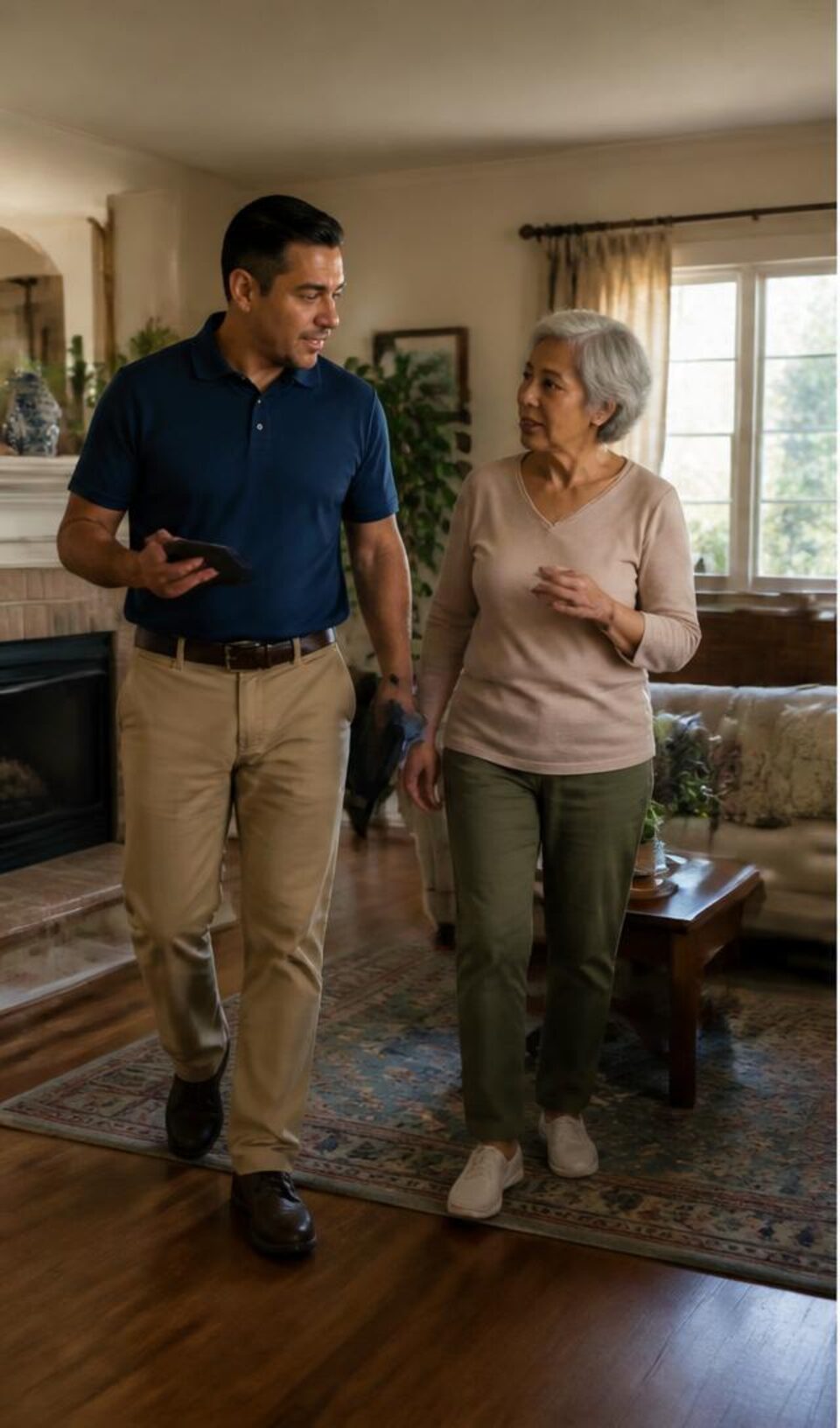
A home safety assessment should not feel like someone is grading your house. It is simply a careful walk through an ordinary day. You are looking for places where a person pauses, reaches for support, changes how they move, or avoids an activity altogether. Those moments point to improvements that can make life easier.
Begin at the curb
Approach the home the way the resident does. Notice the distance from the car, changes in slope, uneven paving, loose gravel, and whether there is a place to pause. At the entry, consider whether someone can hold a rail while reaching for keys and opening the door.
Once inside, follow the most common path. Are shoes, cords, or furniture narrowing it? Do floor transitions catch a toe or walker wheel? Can the lights be switched on before entering a dark space? A clear route is often more valuable than adding equipment in isolated spots.
Watch a normal bathroom routine
Bathrooms reveal how balance, reach, and strength work together. Observe the approach to the toilet, the motion of sitting and standing, and the step into the shower. Look for improvised support such as towel bars, counters, or a doorframe. Those habits show where properly anchored support may be needed.
Also consider privacy and assistance. If another person helps with bathing or dressing, the room needs enough working space. If the door blocks access after a fall, changing its swing may be more urgent than replacing a fixture.
Look closely at nights, stairs, and carrying
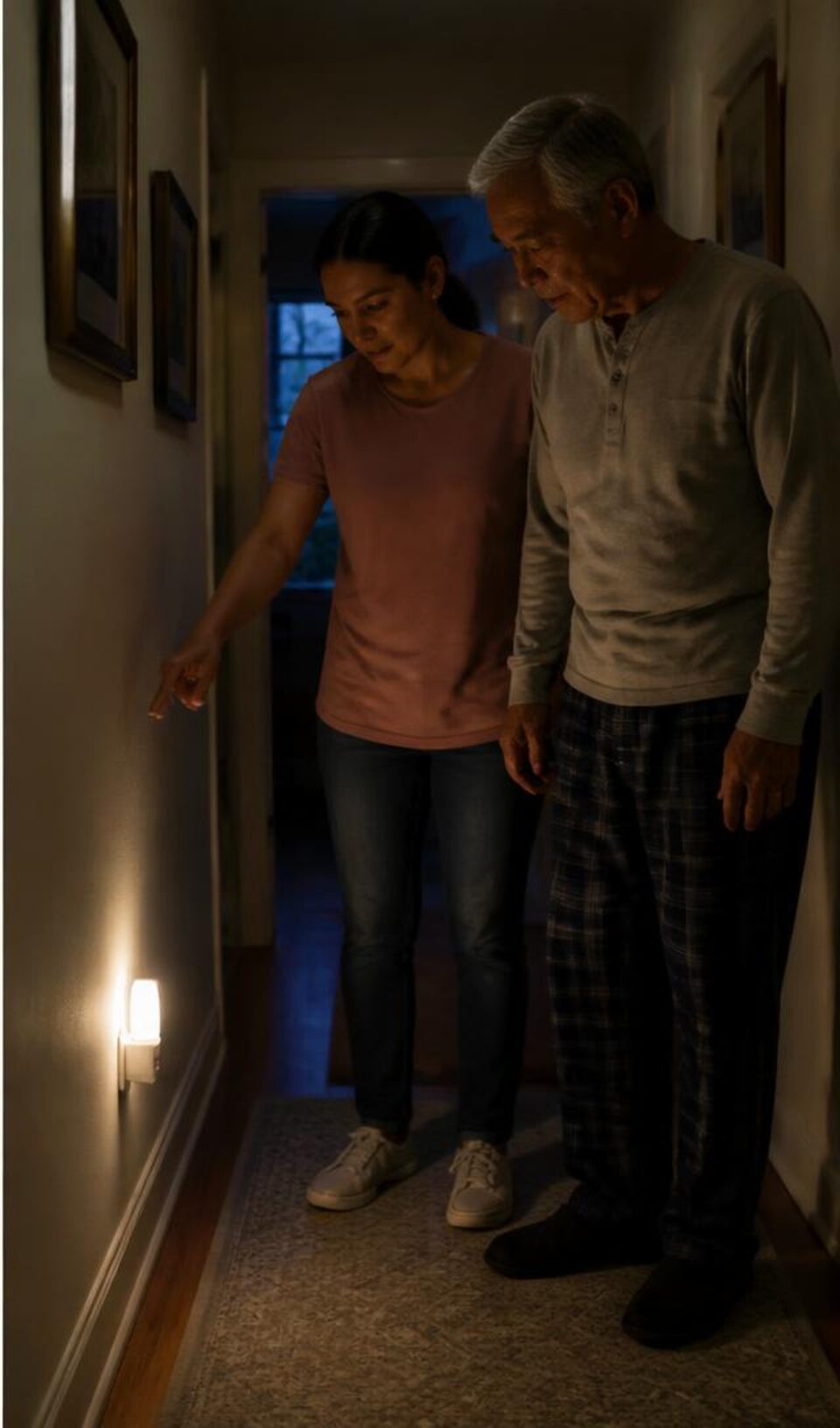
Ask what happens after dark. The path from bed to bathroom should have even, low-glare light and no obstacles. A phone or call device should be reachable from bed. The bed height should allow the resident's feet to meet the floor during a transfer.
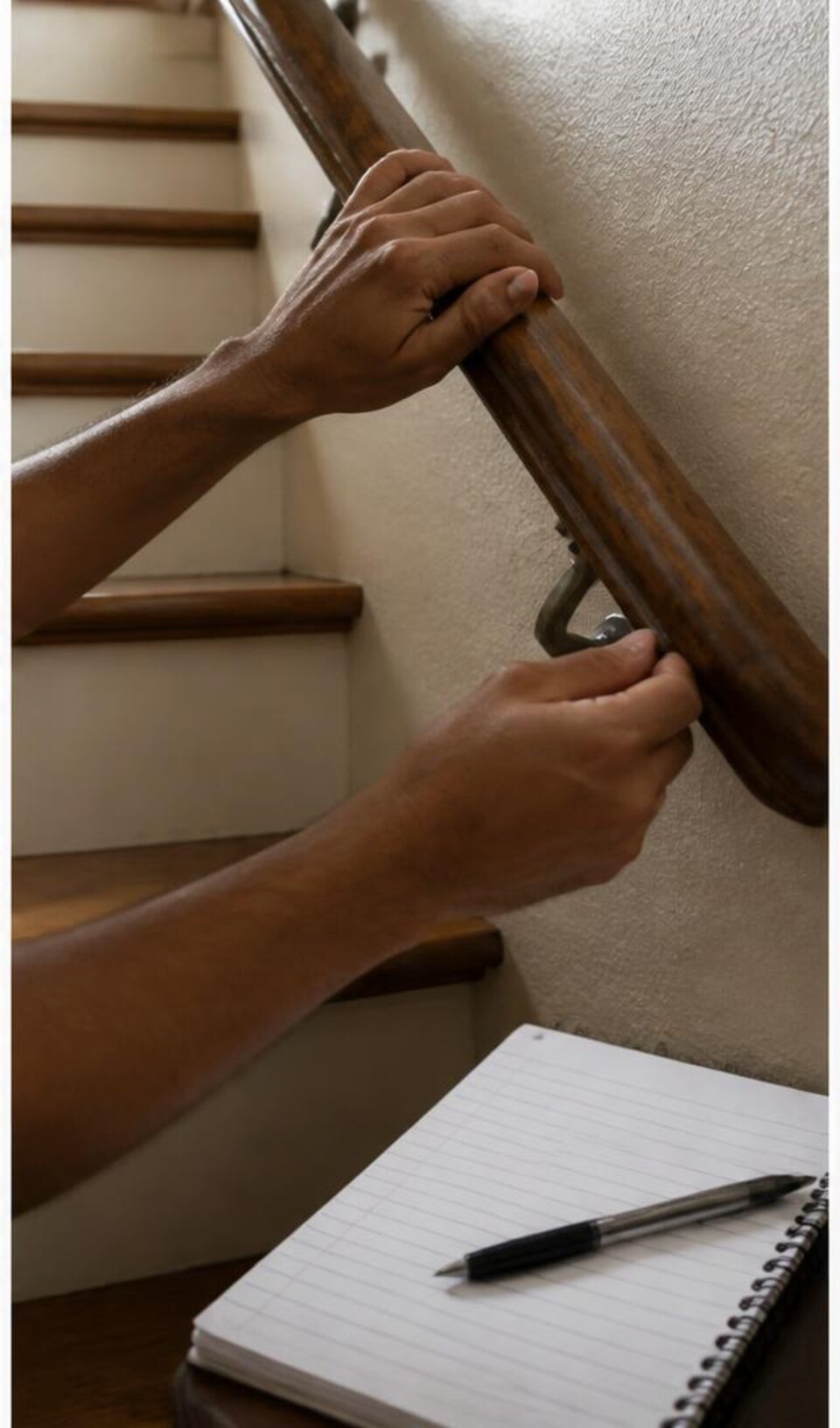
On stairs, watch whether the person can grasp a rail through the entire trip and whether landings offer a safe pause. Then notice what they carry. Laundry, groceries, or a pet can turn a manageable staircase into a risky one.
Turn observations into priorities
Start with hazards that could cause immediate harm, then address tasks that are already difficult. Future improvements can be planned around likely needs and opportunities, such as adding wall backing while a bathroom is open.
Medical, vision, and mobility concerns may call for input from a healthcare professional or occupational therapist. Construction questions belong with a qualified contractor. A useful assessment brings those perspectives together rather than pretending a single checklist can answer everything.
Keep exploring with our fall prevention guide or our accessible bathroom guide.
Walk through the home with fresh eyes
Aging in Comfort can help connect the moments that feel difficult with practical construction options and a sensible order of priorities.