
Practical guidance for life at home
Making the Kitchen Easier to Use as You Get Older

A kitchen can become tiring years before it becomes unusable. The clues are easy to miss: heavy dishes migrate onto the counter, the bottom shelf stops getting used, and carrying a hot pan from the range to the sink feels less comfortable. Small design decisions can return a surprising amount of ease to the room.
Bring everyday things forward
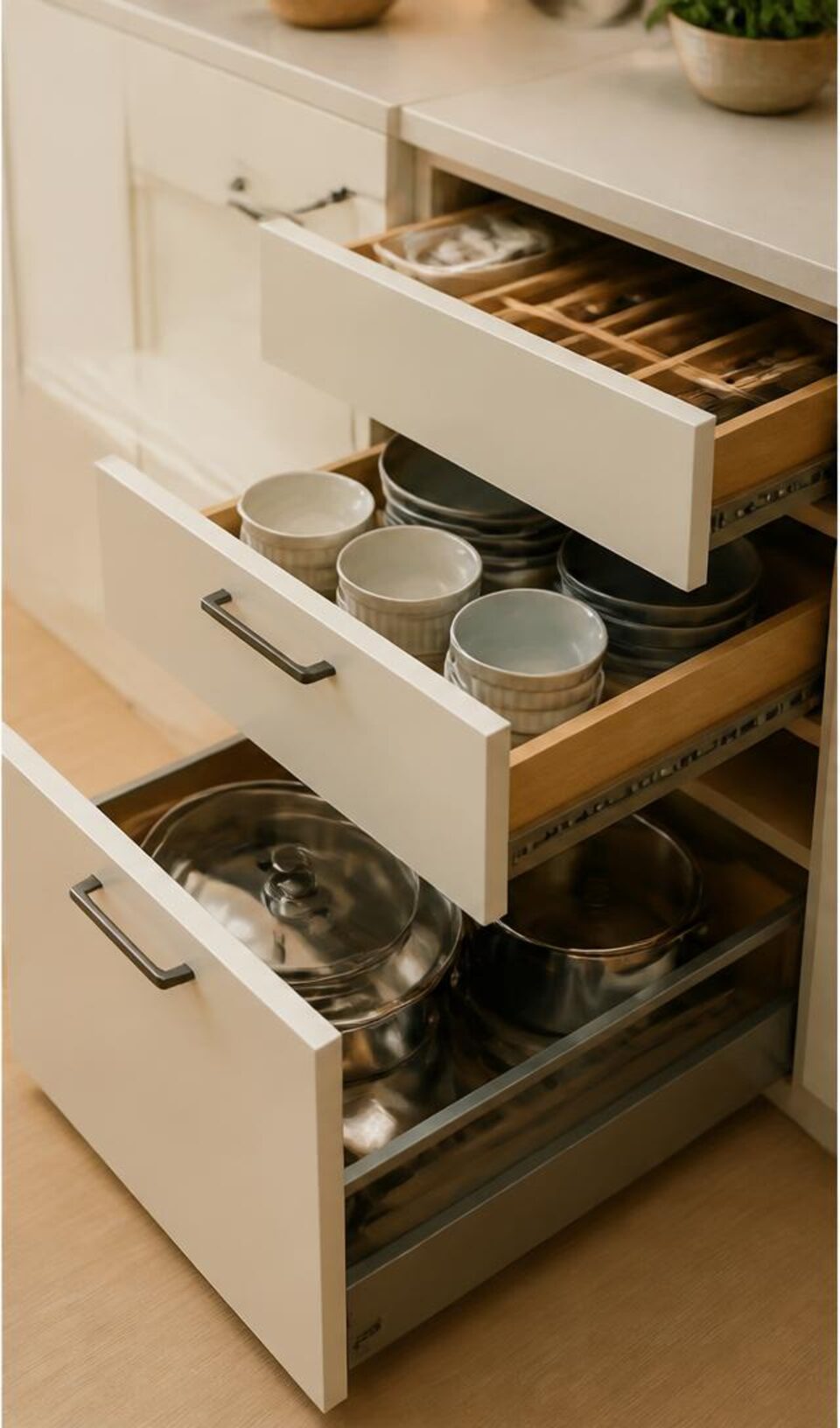
Deep base cabinets force people to crouch and reach into the dark. Full-extension drawers and pull-out shelves bring the contents into view. Frequently used dishes and food should live between comfortable knee and shoulder height, so a step stool is no longer part of the routine.
Upper cabinets can sometimes be lowered or fitted with pull-down hardware, but open shelves are not automatically easier. They can create visual clutter and still require reaching. The best storage plan begins with what the household actually uses each week.
Shorter trips make cooking feel safer
The familiar idea of a work triangle still helps: the refrigerator, sink, and cooking surface should not require long walks with something hot or heavy. In a large kitchen, a small dedicated preparation area can be more useful than rearranging every cabinet.
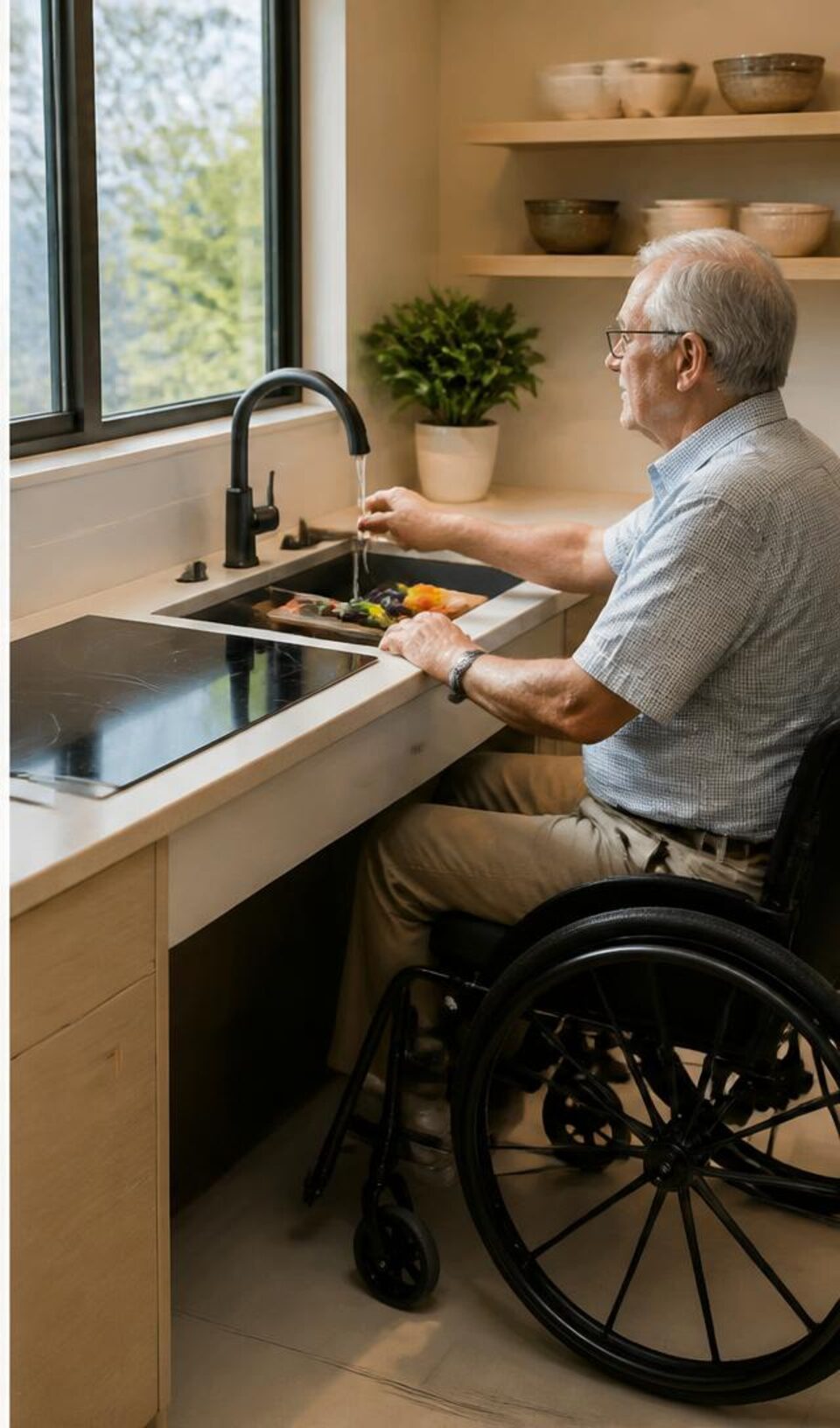
A seated work surface or open knee space can help someone who uses a wheelchair or simply tires while standing. The surface height must suit the person and task. There also needs to be safe protection around hot pipes, sharp edges, and the underside of a cooking surface.
Choose controls you can see and reach
Lever faucets are easier for stiff hands, while a pull-down sprayer reduces the need to lift a pot into the sink. Front controls on a range can avoid reaching over heat, but they should include safeguards when children or cognitive changes are a concern. Induction cooking remains cooler around the pan, though it may require compatible cookware and an electrical review.
Lighting deserves more attention than it gets. Bright, even ceiling light helps with movement, while under-cabinet fixtures illuminate cutting and measuring. Reduce glare on polished counters and make switches easy to find at each entrance.
A remodel can happen in sensible stages
Not every kitchen needs to be demolished. Better lights, new cabinet hardware, a lever faucet, organized drawers, and a clear floor path can improve daily use now. Cabinetry, appliance heights, plumbing, and electrical changes can follow when the budget and timing are right.
Los Angeles homes vary widely in age and construction. Before committing to a layout, confirm wall conditions, utilities, ventilation, and permit needs. A written scope makes it easier to separate the improvements that matter from upgrades that are mostly cosmetic.
Keep exploring with our home safety assessment or our aging in place guide.
Make the kitchen fit the way you live
We can help identify the changes that would reduce reaching, bending, standing, and carrying in your current kitchen—without changing what you already enjoy about it.